How about making your first stitch in crochet for beginners right now?
Ad
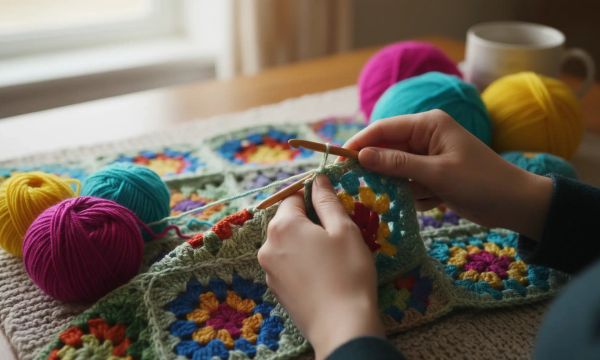
Have you ever imagined ending the day wrapped in something made by yourself? Crochet for beginners is much simpler, and more welcoming, than it seems.
Many people think they need talent, but crochet for beginners is about consistency and patience, not perfection.
Ad
Making a blanket is a great start because progress shows quickly. Each completed row becomes a small pride.
And before you know it, you are saying: “wow, I made this myself.” Shall we begin?
Ad
What you Need to Know Before Starting
First of all, know this: you do not need to master everything at once. In crochet for beginners, learning happens naturally as you repeat the movements.

You will basically need:
- Yarn
- A hook
- A comfortable little corner
- A bit of patience
In the first few minutes, your hand may feel stiff and the stitches may look uneven.
That is absolutely normal, because your body is still learning the movement.
The secret is to practice a little every day. Crochet is muscle memory, and it develops with calm repetition.
Types of Yarn Ideal for your First Blanket
Choosing the right yarn makes things much easier. It influences comfort, the look of the blanket, and even your motivation.
To start, prefer yarns that are:
- Medium thickness
- Soft to the touch
- Easy to unravel
- Durable for regular use
Very thin yarns require more control and can be frustrating at the beginning. Very thick yarns may tire your hand more quickly.
Cotton is great because it defines stitches well, while acrylic is usually lighter and more affordable.
For your first blanket, choose something visually pleasing, because motivation also comes from aesthetics.
Crochet Hooks: Which One to Choose
In crochet for beginners, choosing the hook is simple but important. The yarn packaging usually indicates the recommended size.
For blankets, hooks between 4mm and 6mm usually work very well. They allow the project to grow quickly without requiring excessive effort.
If possible, choose hooks with an ergonomic handle. Comfort helps you practice longer without discomfort.
Think of it this way: a comfortable hand produces more even stitches and a more enjoyable experience.
Basic Stitches to Make the Blanket
You do not need to know dozens of stitches to make a beautiful blanket.
In crochet for beginners, three stitches are enough for almost everything.
- Chain stitch, which forms the base of the project and starts almost any piece
- Single crochet, ideal for creating a tighter and firmer texture in the blanket
- Double crochet, perfect for making the work lighter and helping the piece grow faster
If you want something simple and effective, you can make the entire blanket in double crochet.
It is repetitive, easy to memorize, and extremely versatile.
Do not worry if your stitches look a little crooked at first. Crochet carries the charm of handmade work, and small variations are part of it.
How to Calculate the Blanket Size
Before making endless chains, it is worth planning the size of the blanket. This prevents frustration and helps you have a clear goal.
Ask yourself what the purpose of the piece will be:
- lap blanket, ideal for moments of everyday coziness
- sofa blanket, perfect for decorating and adding more comfort to the living room
- bed blanket, great for complementing décor and adding layers of comfort to the space
A sofa blanket usually measures around 1.20m x 1.50m. To calculate correctly, make a 10cm x 10cm sample and count how many stitches fit in that space.
With that base, you can estimate how many chains you need to start.
This small planning step brings more confidence and avoids rework.
Step by Step to Start your Blanket
Now let’s move on to the practical part.
- Make chains until you reach the desired width.
- Check that the base is not twisted.
- Start the first row with double crochet or single crochet.
- At the end of the row, turn your work.
- Repeat the same pattern until you reach the desired length.
The secret here is calm repetition. Put on some music, a show, or simply enjoy the moment.
Crochet has something almost therapeutic about it. It organizes thoughts, reduces anxiety, and creates a clear sense of visible progress.
How to Make the Perfect Finish
When the blanket reaches the ideal size, the finishing touches turn the project into a truly complete piece.
You can choose:
- a simple single crochet border, which helps align and structure the entire blanket
- a decorative border, ideal for adding a special touch and more personality
- fringes at the ends, bringing movement and a more artisanal charm
- a contrasting row, using another color to create highlight and a striking finish
Besides making it more beautiful, the finishing helps align the edges and correct small irregularities.
It is like putting a frame around a painting: the final detail enhances everything.
Common Mistakes in Crochet for Beginners
Making mistakes is part of the process, especially in crochet for beginners. And that is not a problem, it is learning.
Some common mistakes include:
- pulling the yarn too tightly
- forgetting to count stitches
- not making turning chains at the beginning of the row
- losing motivation too quickly
If you notice a small mistake, evaluate whether you really need to unravel it. It is not always necessary to undo several rows.
Crochet also teaches something important: patience and flexibility. You are learning, and that alone is already an achievement.
How to Finish and Care for your Blanket
When you are done, cut the yarn leaving a comfortable tail. Pull the end through the last stitch and tighten to secure it.
Use the hook to hide the ends between the stitches, ensuring a clean finish.
To care for your blanket:
- Wash according to the yarn instructions
- Avoid wringing it forcefully
- Dry it flat
- Store it folded
Taking good care of the piece ensures durability and preserves the beauty of your work.
Your First Blanket Starts Now
Crochet for beginners is not about making something perfect. It is about starting, persisting, and enjoying the process.
Each chain is a small step. Each row is real progress. You do not need to wait until you feel ready. You become ready by doing.
Pick up the hook today, make your first chains, and allow yourself to learn with lightness.