Ball rolling, anthem echoing, heart racing: the UEFA Champions League doesn’t start at the opening whistle, it starts with anticipation.
Ad
It’s that moment when you realize it’s not just another match, it’s a European night, it’s history being written.
Round after round, the UEFA Champions League delivers emotion, drama, and matches no one wants to miss.
Ad
And today, following all of this has become simpler, more accessible, and far more connected.
👉 This content is informative and does not provide live broadcasts.
Ad
Live Coverage of the UEFA Champions League
Paramount+

Paramount+ solves a classic fan problem: wanting to watch everything in one place.
In regions where it holds the rights, the app delivers broad coverage, with live matches, replays, and extra content that helps explain each UEFA Champions League round.
Beyond the matches, the service invests in pre- and post-match analysis, debates, and special programs, making the experience more complete.
How to get started:
- Subscribe to the plan available in your region
- Access the live sports section
- Enable reminders for Champions League matches
A solid choice for those who don’t want to switch apps every round and prefer to follow the Champions continuously.
DAZN

DAZN steps in as a solution for fans who follow much more than just the Champions. The app is sports-focused and brings together several European competitions.
When the tournament is included in the local catalog, DAZN offers live matches, highlights, and complementary content, ideal for those who like switching between leagues and tournaments.
How to get started:
- Create an account in the app or on the website
- Check which rights are available in your country
- Explore the live sports schedule
Perfect for those who live football broadly and enjoy having multiple leagues on one platform.
Amazon Prime Video
Here the focus is on the most attractive matches. Prime Video usually streams selected UEFA Champions League games, typically high-interest clashes with large audiences.
The advantage lies in image quality, streaming stability, and the fact that many fans already subscribe to the service.
How to get started:
- Check if the Champions League is available in your region
- Access the live sports section
- Join the stream at kickoff time
A great option for those who want to watch big duels without needing an extra app.
UEFA.tv
UEFA.tv is not focused on full matches, but works as a complement for those who closely follow the UEFA Champions League.
The platform offers highlights, best moments, interviews, behind-the-scenes footage, and exclusive content that helps better understand each round and every matchup.
How to get started:
- Create a free account on the platform
- Follow content after matches
- Explore interviews and official materials
Ideal for those who like to go beyond the final score and consume the institutional and historical side of the competition.
TV Channels that Broadcast the UEFA Champions League
For those who enjoy watching on the big screen, several broadcasters continue to show the UEFA Champions League across different countries.
Below is a quick overview with options for free-to-air TV and pay TV.
| Channel | Country / Region |
|---|---|
| SBT | Brazil |
| Space | Brazil |
| CBS | United States |
| CBS Sports Network | United States |
| TNT Sports | United Kingdom |
| Sport TV | Portugal |
| TVP | Poland |
| Nova Sport | Czech Republic |
| SRG SSR | Switzerland |
| TV2 | Norway |
| Cytavision | Cyprus |
Official Updates on Social Media
The UEFA Champions League also lives intensely off the pitch.
Social media has become an essential part of the modern fan experience, delivering fast information, behind-the-scenes access, and real-time emotion.
On the official Instagram (@championsleague), the focus is on goals, short videos, and stadium atmosphere, with images that capture the true spirit of the competition.
On X (@ChampionsLeague), fans find instant updates, statistics, and plays almost at the same second they happen.
Facebook (UEFA Champions League) gathers interviews, special content, and more complete visual coverage, while the official UEFA YouTube channel brings highlights, analysis, short documentaries, and exclusive material that deepens each round.
Stages and Phases of the Competition
The current UEFA Champions League season follows the new league-phase format, which made the tournament more dynamic and unpredictable.
Now, 36 clubs compete in a single table, leaving behind the old fixed groups.
Each team plays 8 matches, with 4 at home and 4 away, against different opponents, increasing the number of high-level clashes from the start.
Competition format summary:
- 36 teams in a single table
- 8 matches per club in the league phase
- The top 8 advance directly to the round of 16
- From 9th to 24th, playoffs played over two legs
- From 25th to 36th, elimination
This model ensures every point truly matters, turning even early matches into important decisions.
Analysis of Clubs Entering Strong this Season
The UEFA Champions League brings together a dangerous mix: heavy tradition and squads at an extremely high technical level.
Among the strongest contenders, Real Madrid remains the historical benchmark, always competitive and decisive in big moments.
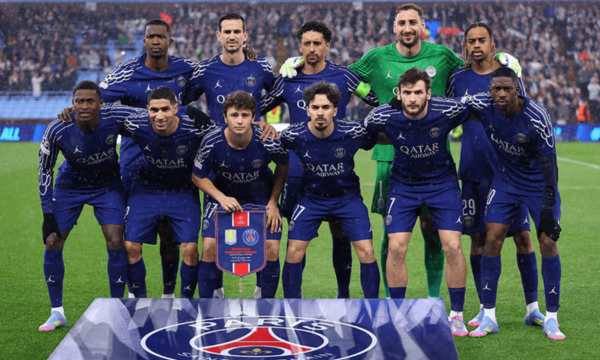
Bayern Munich maintains its collective strength and European intensity, while Paris Saint-Germain, the reigning champion, once again enters as a real title contender.
English sides like Arsenal, Liverpool, and Manchester City keep pushing with deep squads and well-defined styles.
Meanwhile, Barcelona and Inter Milan appear as technical forces capable of changing the course of the competition at any moment.
What Makes the Champions League the Greatest Tournament in the World
The UEFA Champions League is not just a competition, it is the ultimate stage of club football.
It brings together the best players on the planet, clashes different playing styles, and creates narratives that span generations. Winning the Champions is, for many athletes, the absolute peak of a career.
Add to that the new format, which delivers big matches from the start, and the result is a tournament that offers constant emotion, with no room for irrelevant games.
Legends with the Most Goals
The history of the tournament is also told through the boots of its greatest scorers.
At the very top stands Cristiano Ronaldo, the competition’s all-time top scorer with more than 140 goals.
Right behind him is Lionel Messi, another symbol of brilliance and consistency on European nights.
Robert Lewandowski completes the group of players who have surpassed the 100-goal mark, cementing himself as one of the most lethal strikers in the tournament’s history.
These names represent more than numbers: they are players who decided finals, turned impossible matches around, and defined entire eras of the Champions League.
Ranking of the Most Successful Clubs
When it comes to titles, the hierarchy of the UEFA Champions League is clear, and heavy.
Check the historical title ranking:
- Real Madrid – 15 titles
- AC Milan – 7 titles
- Liverpool – 6 titles
- Bayern Munich – 6 titles
- Barcelona – 5 titles
This ranking helps explain why some clubs seem to grow on decisive nights. It’s not by chance, it’s winning culture, built match by match over decades.
In the end, the UEFA Champions League is exactly that: emotion, history, technology, and football pushed to the absolute limit.