Interior design styles can transform your home and make every corner reflect your personality.
Ad
The sofa, colors, lighting and even that object on the shelf help tell a story.
Each style has a different personality and can transform the feeling of a space.
Ad
Maybe you like elegant spaces, or perhaps you prefer wood, plants, and a cozy atmosphere.
And if you mix some references, you can create a space that looks even more like what you imagined.
Ad
So, come take a tour through different styles and discover which one suits you best!
What your Decorating Style Says about You

Before choosing furniture or grabbing a paintbrush, take a look around.
How would you like to feel when you walk into your home? Cozy, organized, elegant, free, or practical?
The answer may already indicate which interior design styles suit you best.
If you like sophisticated details, the classic style may catch your attention.
If you prefer bright spaces and functionality, perhaps Scandinavian style will be more interesting.
There is also no obligation to choose just one style.
Your home can bring together different references and still have personality.
Now let’s step into each space and discover what makes each proposal so special.
Classic: Elegance that Never Goes Out of Style
Imagine a room with elegant furniture, neutral tones, and sophisticated details.
This is the territory of the classic style, known for creating timeless and visually refined spaces.
Here, the details make a difference!
Moldings, mirrors, light fixtures, and refined fabrics can appear without making the space feel excessive.
To bring this concept into your home, think about:
- Wood and furniture with a traditional appearance
- Sophisticated neutral colors
- Mirrors and decorative objects
- Cozy lighting
- Fabrics with an elegant finish
Among interior design styles, the classic style suits those who like beautiful and timeless spaces.
Modern: Simple Lines and a Contemporary Look
Now imagine walking into a room with straight lines, few excesses, and contemporary looking furniture.
The modern style values simplicity, but that does not mean creating a boring space.
Here, each element usually has a clear function.
Neutral colors can have points of emphasis, while glass, metal, and wood create contrast.
| Element | How it appears in modern style |
|---|---|
| Colors | Neutrals with some points of emphasis |
| Furniture | Straight lines and a simple look |
| Materials | Glass, metal, wood, and other finishes |
| Decor | Few carefully chosen elements |
| Lighting | Functional and well distributed |
If you like contemporary and organized spaces, this may be one of the ideal interior design styles for you.
Rustic: Comfort and Charm with Natural Touches
Now let’s move into a warmer space.
Imagine exposed wood, natural fibers, comfortable fabrics, and imperfections that make the space authentic.
The rustic style seeks precisely this feeling of closeness to nature.
You don’t need to turn your home into a cabin.
A wooden table, a fiber basket, or a light fixture with a natural finish can already change the space.
Among interior design styles, plants also go very well with this concept.
The result is a space with a lived-in feel, welcoming and full of personality.
Scandinavian: Lightness, Comfort, and Functionality
Now imagine light colored walls, plenty of natural light, and a comfortable sofa waiting for you.
Scandinavian style focuses on simplicity, functionality, and comfort, generally with a light palette and natural materials.
Wood, cozy fabrics, and plants help make the space feel less cold.
To create this atmosphere, go for:
- Light and neutral tones
- Wood in details or furniture
- Natural lighting
- Soft fabrics
- Plants and natural elements
- Functional decor
Among interior design styles, Scandinavian style inspires light, comfortable homes without excess.
And you don’t have to imagine everything only in your head.
Tools like the Planner 5D app allow you to create projects and visualize spaces before transforming the room.

Industrial: Personality with an Urban Touch
We’ve reached a style with plenty of attitude.
Think of brick walls, metal, wood, and exposed structures.
There you go: you’ve already started entering the industrial universe!
This concept emerged inspired by old industrial spaces and gained ground in residential decorating.
The secret is to balance the more raw materials with comfortable elements.
A soft sofa can share space with a metal shelf.
A dark wall can be made lighter with proper lighting.
The result is an urban, striking space full of personality.
Minimalist: Fewer Elements and more Balance
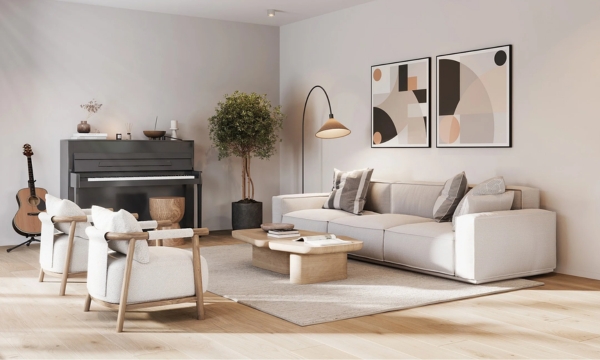
Now look at that space full of objects.
Imagine removing some of them and leaving only what really makes sense.
That is one of the central ideas of minimalism.
The minimalist style values simplicity, functionality, and visually clean spaces.
This does not mean leaving the house empty.
The idea is to choose better elements and avoid excesses that weigh down the space.
Subtle colors, functional furniture, and a few objects can create a greater sense of organization and tranquility.
If you like practicality and don’t enjoy accumulating things, this style may make a lot of sense.
How to Mix Different Styles without Losing Harmony
Here comes the fun part. You don’t need to choose just one of the interior design styles.
Imagine a modern living room with a rustic wooden armchair. Or a Scandinavian space with an industrial light fixture.
The secret is to find points of connection between the references.
Some combinations can work very well:
| Combination | What can connect the styles |
|---|---|
| Modern + Rustic | Wood and simple lines |
| Scandinavian + Industrial | Light colors and metal |
| Classic + Modern | Elegant furniture and contemporary lines |
| Rustic + Scandinavian | Wood, fabrics, and natural tones |
| Minimalist + Modern | Few elements and simple shapes |
Start with one predominant base and add details from the second style.
Now it’s your Turn: Which Style Best Matches your Personality?
If you’re still unsure between the interior design styles, look at the spaces that caught your attention the most.
Save references, compare colors, furniture, and materials, and notice which elements appear most often.
In the end, the best interior design styles are the ones that make you think: “this is how I want to feel at home.”
So, now it’s your turn: classic, modern, rustic, Scandinavian, industrial, or minimalist?
Or perhaps a mix that is all your own?