Everything you need to know to watch every FIFA World Cup 2026 game is right here!
Ad
Do you also feel like the World Cup starts long before the first whistle?
The FIFA World Cup 2026 has that curious effect of slipping into conversations, shaking up schedules, and becoming a constant topic without asking permission.
Ad
It’s that time when your phone is always close, kick-off times start to matter, and you already know that some commitments will need to adapt.
Following the FIFA World Cup 2026 live isn’t just watching football. It’s living the tournament as it happens, at the same pace as the rest of the world.
Ad
And when you understand how everything works, there’s room to enjoy the best of the World Cup: emotion, anticipation, and stories unfolding match by match.
👉 This article is for informational purposes only. Here you will find reliable apps with live game specifications.
Where to Watch FIFA World Cup 2026 Matches Live
There isn’t a single app that works for everyone. At the FIFA World Cup 2026, each region has its official partners, and understanding that helps avoid frustration on matchday.
Here’s a simple, straightforward way to get to know the main apps:
- FOX Sports App: widely used in the United States, works well on both mobile and TV
- Peacock: a popular alternative for matches and complementary coverage
- FuboTV: a good option for fans who like to follow several games in a row
- YouTube TV: convenient for those already using the Google ecosystem
- CTV App: centralizes official coverage in Canada
- TUDN App: very present in Mexico, with a strong focus on football
- ViX: a strong platform in Latin America, used by many fans
- BBC iPlayer: a reference in the United Kingdom, public and reliable access
- ITVX: a widely used British alternative
- ARD Mediathek: a relevant option in European markets
- SuperSport App: widely used in Sub-Saharan Africa
- beIN Connect: strong presence in North Africa and the Middle East
- Disney+ Hotstar: available in selected Asian markets
- SBS On Demand: the main option in Australia
- FIFA+: the official global platform, focused on behind-the-scenes, exclusive content, and institutional coverage
The golden tip is simple: find out which of these platforms is official in your country and have everything ready before the ball starts rolling.

How the Competition is Organized from Start to Final
The FIFA World Cup 2026 has significantly changed how the tournament unfolds, and that directly impacts how fans follow the matches.
The tournament now features 48 national teams, something unprecedented in the competition’s history. This expands the number of countries, playing styles, and stories on the pitch.
The first phase is made up of 12 groups of 4 teams. Each team plays three matches, but with one important detail: there are no irrelevant games.
Advancing to the next phase are:
- the top two teams from each group
- the 8 best third-placed teams overall
With this format, the knockout stage includes 32 teams, bringing a decisive atmosphere right from the start.
Participating Countries and Group-Stage Logic
Before looking at names one by one, it’s worth understanding the logic. At the FIFA World Cup 2026, the opening phase was designed to be easy to follow, even with more teams involved.
Step 1 — initial division
Teams are organized into 12 groups, labeled A to L, with four teams in each group.
Step 2 — group matches
Each team faces the other three in its group, totaling three matches in this phase.
Step 3 — who advances
The top two teams in each group qualify automatically, along with the 8 best third-placed teams overall.
With that in mind, the groups are as follows:
Group A
- Mexico · South Korea · South Africa · Play-off (Europe)
Group B
- Canada · Switzerland · Qatar · Play-off (Europe)
Group C
- Brazil · Morocco · Haiti · Scotland
Group D
- United States · Australia · Paraguay · Play-off (Europe)
Group E
- Germany · Ecuador · Ivory Coast · Curaçao
Group F
- Netherlands · Japan · Tunisia · Play-off (Europe)
Group G
- Belgium · Iran · Egypt · New Zealand
Group H
- Spain · Uruguay · Saudi Arabia · Cape Verde
Group I
- France · Senegal · Norway · Play-off (Intercontinental)
Group J
- Argentina · Austria · Algeria · Jordan
Group K
- Portugal · Colombia · Uzbekistan · Play-off (Intercontinental)
Group L
- England · Croatia · Ghana · Panama
The places marked as play-off will be filled after the final qualification rounds, completing each group before the tournament begins.
How Many Teams Advance and How Qualification Works
Qualification at the FIFA World Cup 2026 was designed to maintain a balance between competitiveness and excitement.
In total, 32 teams advance to the knockout stage. That represents two-thirds of the participating teams, more than in previous World Cups.
The system works like this:
- group winners and runners-up qualify directly
- third-placed teams enter a general ranking
- only the 8 best third-placed teams advance
This logic reduces early eliminations and keeps more matches meaningful until the end of the group stage.
Once the knockout phase begins, every match is decisive. One bad game means immediate elimination.
The Impact of a Format with More Matches
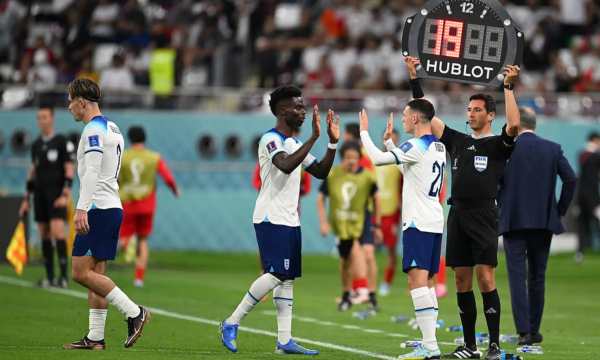
With 104 matches in total, the FIFA World Cup 2026 becomes the largest World Cup in history in terms of number of games.
That changes the tournament’s rhythm:
- matches on almost every day
- fewer long breaks
- more constant attention from fans
For those following along, the feeling is of a more alive World Cup, more present and more integrated into everyday life.
It also creates more unexpected stories, as less traditional teams have more room to surprise.
What Sets this World Cup Apart from Previous Editions
The FIFA World Cup 2026 brings together unprecedented elements that change the tournament’s pace from start to finish.
- 48 teams increase diversity and bring new styles onto the pitch.
- 104 matches create a more intense calendar, with fewer low-stakes games.
- Three host countries spread the World Cup across different cultures and environments.
- Expanded format makes the knockout stage larger and every round more decisive.
All of this transforms the tournament experience, both for those playing and for those watching.
For fans, it’s the chance to follow more different matchups, more intersecting stories, and entire weeks of football that truly matter!
Each match leads naturally to the next, and before you realize it, you’re completely hooked.
Conclusion
Watching games live, commenting on the plays, and feeling the emotion in real time is what turns the World Cup into something special.
With the right information in hand, the FIFA World Cup 2026 flows better, feels easier to follow, and becomes much more fun to live.